Reimagining Legal Technology for Professionals

Role
Founding Product Designer
[Solo]
Team
Cross-functional collaboration
Product, Engineering, Leadership
Timeline
Feb 2026 - Present
Launched May 2026


The situation
My approach in one line
I designed the foundation, not just the façade.

How I worked
1
Audited the existing product end to end. The problem wasn't the features; it was the absence of a system or strategy beneath them.
2
Interviewed end users, domain experts, and internal stakeholders. One signal came through everything: in this field, trust is the product. People won't adopt what they can't verify.
3
Used that insight to reframe the product's purpose, and resisted the urge to jump into screens. Built the design system and core foundation first, so everything after it could move fast and stay consistent.
4
Designed features on top of that foundation, prototyped, and put them in front of real domain experts — refining against their feedback rather than my assumptions.
What that meant in practice
Strategy first
Audited the MVP, ran user and domain-expert interviews, and brought the CEO a redesign plan. The biggest shift: repositioning the product from a "legal chatbot" to a structured legal assistant, a change that redefined what we built and why.
A system, not just screens
Built the design system from scratch on the team's own tech foundation, then partnered with engineering to mirror it in code, closing the gap between design and build.
The part nobody sees
The platform's accuracy depends entirely on how its knowledge base is built. I designed the internal tool that powers that, and through research, identified that this "invisible" foundation held value well beyond its original purpose.
The hardest problem

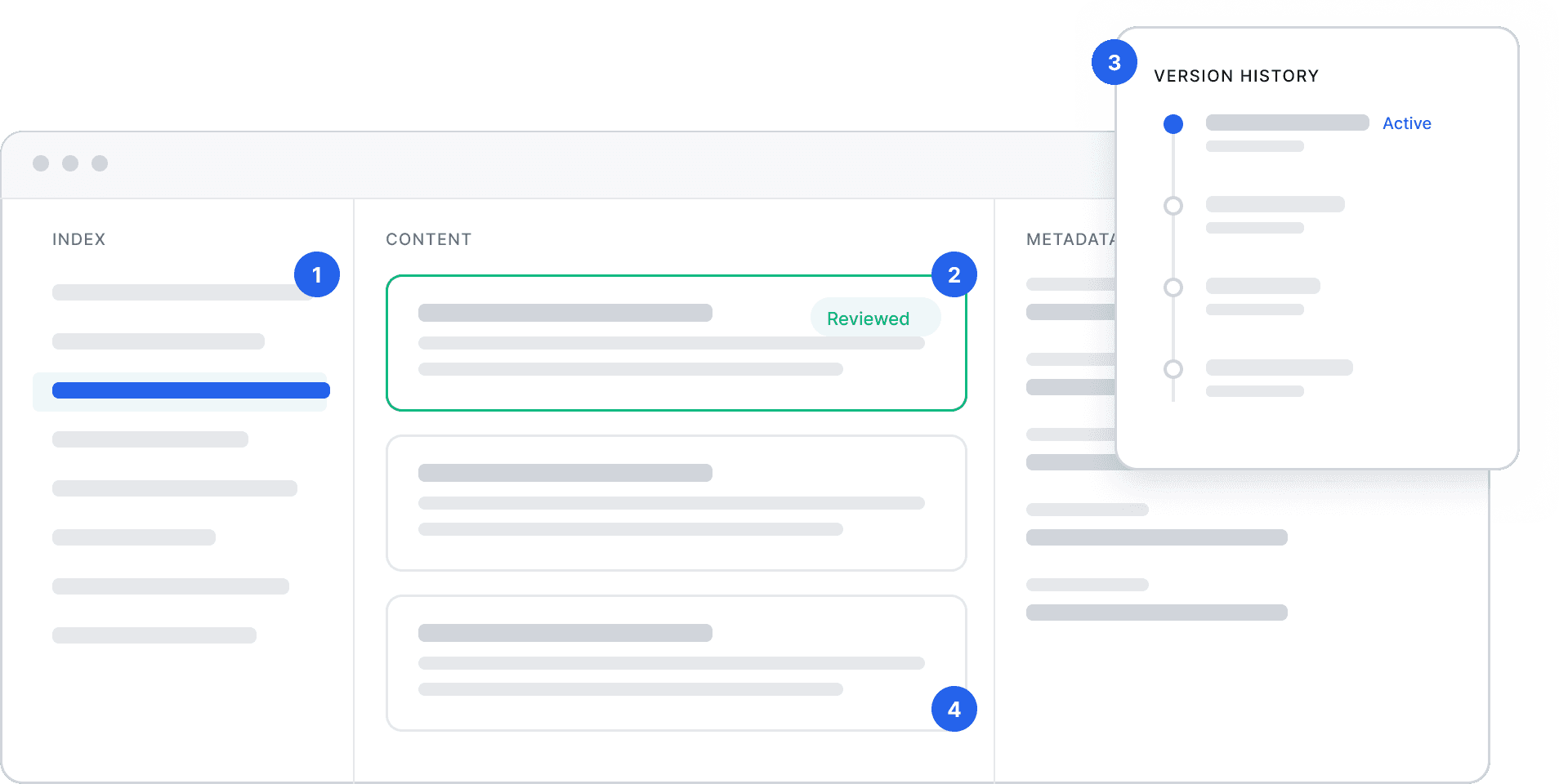
"This makes it easy to see all the versions."
- Domain expert, after testing
The outcome


